
Seaboard Pictish Stones
Seaboard Pictish Stones
The most visible legacy of the Picts are the enigmatic carved stones which you can see either still standing in the Highland landscape or else in local museums and heritage centres. The Seaboard is rich in Pictish history and detailed below are the most famous of our Pictish Stones.
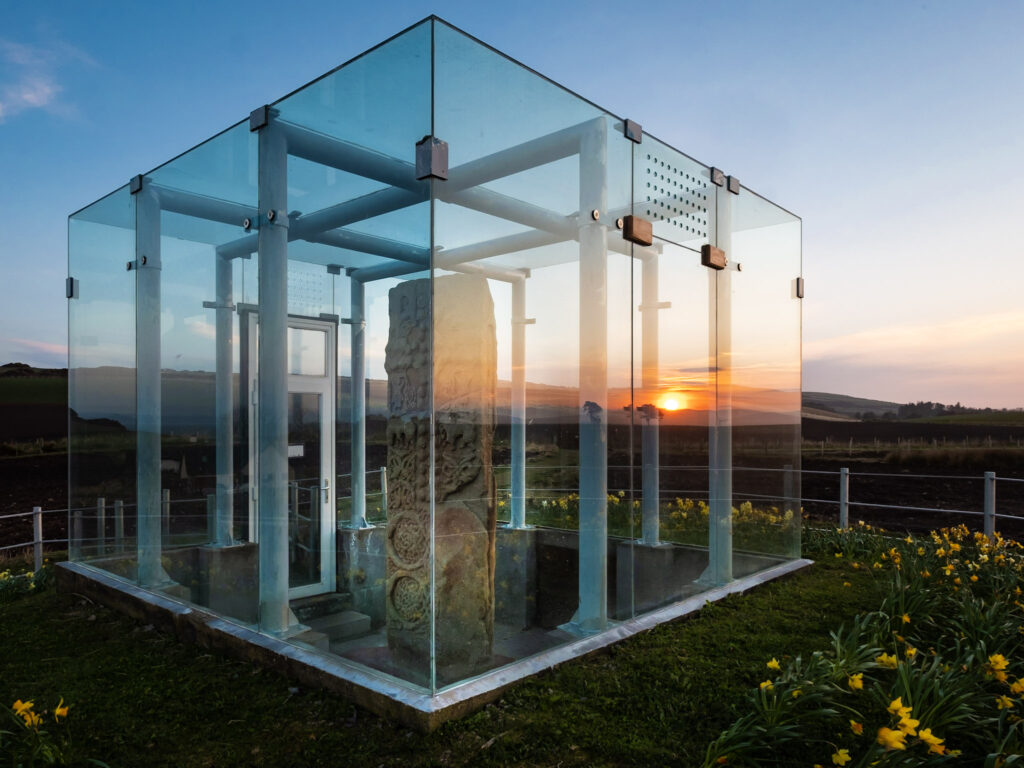
The Shandwick Stone
The Shandwick Stone stands encased in glass, in a magnificent location overlooking the sea near Shandwick, one of the Seaboard Villages on the east coast of the Peninsula. This Pictish stone has origins dating back to 780 AD.
A layby has been provided not far away from the stone, and there is a path from the road.
This stone is part of the Highland Pictish Trail.
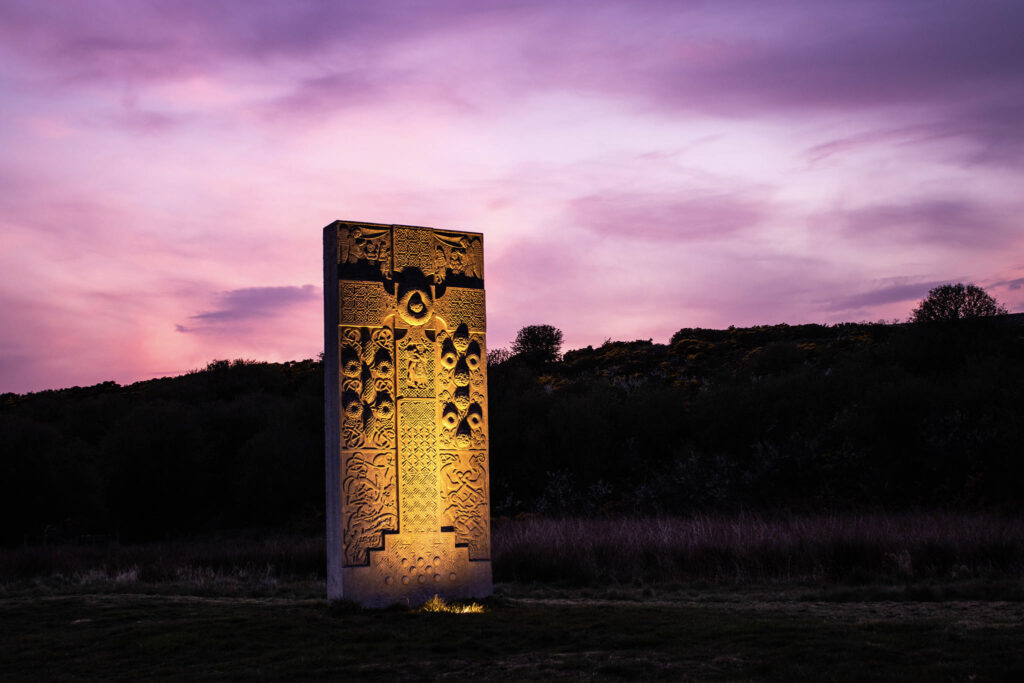
Hilton of Cabdol Pictish Stone
The original Hilton of Cadboll Stone is a Class II Pictish stone that was discovered at Hilton, one of the Seaboard Villages on the East coast of the Peninsula. It is said to be one of the most magnificent of all Pictish cross-slabs. Like other similar stones, it can be dated to about 800 AD. The stone was formerly near a chapel just north of the village. It was removed to Invergordon Castle in the 19th century, before being donated to the British Museum. This move was not popular with the Scottish public and it was moved once more, to the Museum of Scotland in Edinburgh, where it remains today. A reconstruction of the original stone, designed and carved by Barry Grove, was erected on the site in Hilton.
This stone is part of the Highland Pictish Trail. There is a new augmented reality visitor storyboard at the site which really adds to the visitor experience.
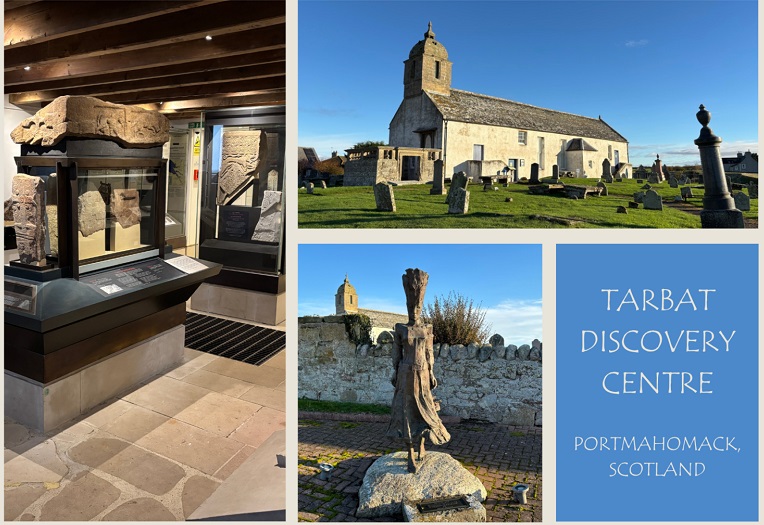
Tarbat Discovery Centre
The Tarbat Discovery Centre is on the grounds of the ancient church of St Colman, displaying works of art created in stone by the Picts more than 1,200 years ago.
These treasures, discovered during a 1990s archaeological dig, include fragments of majestic cross-slabs carved skilfully with elaborate geometric patterns, interwoven with magnificent animals and people.